

Choosing between a premade pouch fill & seal machine and a Vertical Form Fill & Seal (VFFS) line is one of the most important decisions a brand or co-packer can make. Both technologies can produce valid packaging solutions — but they behave very differently when it comes to unit cost, flexibility, minimum order quantities, speed, downtime, and operational complexity.
This article breaks down the practical differences so you can match the right machine to your product, volumes, and commercial goals.
1) How the Two Systems Work
Premade pouch fill & seal
- You purchase finished premade pouches (already formed and printed).
- The machine picks, opens, fills, and seals the pouch
Best known for: premium presentation, high flexibility, convenience features (zipper/spout), and quick format variations and changeovers.
VFFS (Vertical Form Fill & Seal)
- The machine starts from a roll of film (reel/web).
- It forms the bag, seals the back/side seams, fills, then seals the top — continuously.
Best known for: lowest packaging cost per unit at high volumes and high speed for standard bag formats.
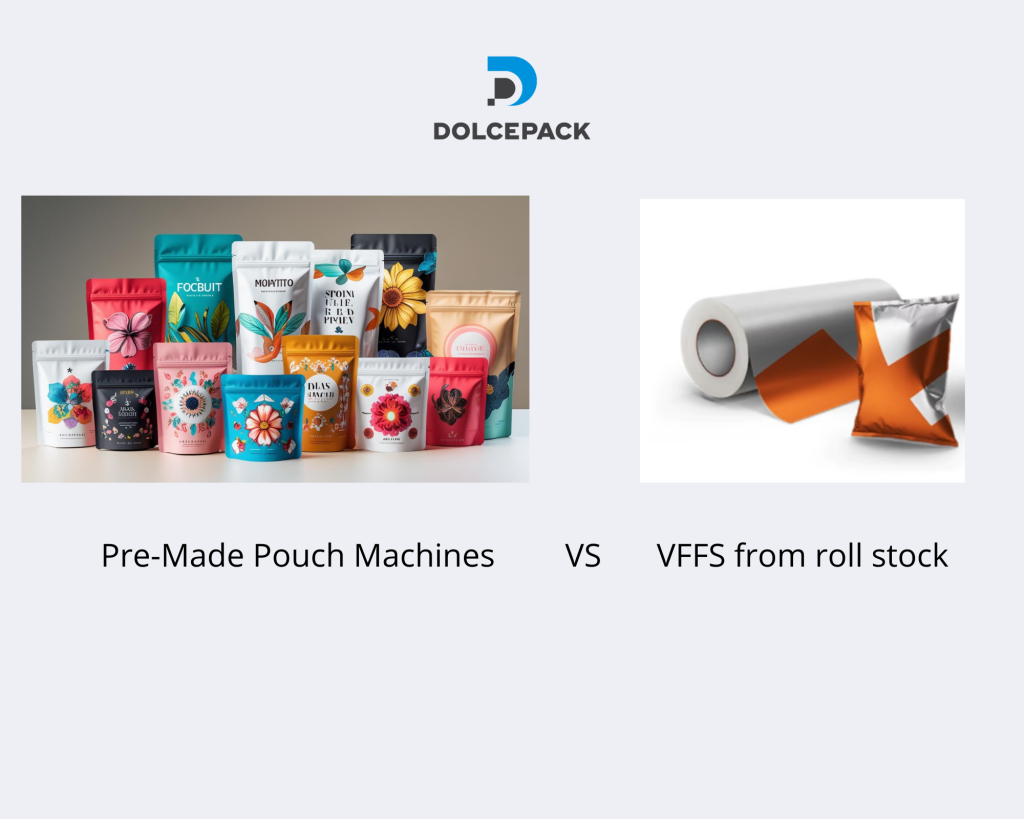
2) Total Cost Comparison: What Really Drives the Difference?
Packaging material cost (unit cost)
- VFFS is typically cheaper per pack because you buy film on a roll and form bags inline.
- Premade pouches cost more per unit because pouch conversion (forming, sealing, adding zipper, bottom gusset, etc.) has already been done by the pouch producer.
Rule of thumb:
If your primary objective is lowest possible packaging cost at high volumes, VFFS usually wins on material economics.
Equipment + setup cost
- VFFS lines can require more integration and process tuning (film tracking, sealing jaws, forming sets, coding, etc.).
- Premade pouch machines can sometimes be simpler to start with because the pouch is already made, but premium features (zipper opening, spout, special shapes) can add complexity and cost.
Hidden cost: downtime and waste
- With VFFS, start-up waste and tuning can be higher because the machine is forming/sealing continuously from film.
- With premade pouches, waste is more controlled, even eliminated completely with the proper controls and sensors integrated into machine operations.
3) Minimum Order Quantity: Premade Pouches vs Reel Film
This is one of the biggest practical differences.
Premade pouches
- You must purchase converted pouches. A common myth is that the MOQs is higher for:
- Printing setup for pouches
- Pouch converting setup (tooling, zipper application, bottom formation, etc.)
- However, many suppliers offer digital printing options that can lower MOQs for startups, seasonal SKUs, or frequent design updates (with a different cost structure), very responsive to marketing requirements.
Reel film for VFFS
- Film on reel often allows more flexible ordering and can be easier to scale economically.
- That said, printed rollstock still has MOQs — especially for custom structures, special finishes, and multiple colors — but the economics often improve faster higeher volumes.
Practical takeaway:
- If you have many SKUs, frequent artwork changes, or limited forecasts, premade pouches (especially with digital print options) can be a smarter operational match.
- If you have stable high-volume runs, rollstock for VFFS can be more cost-efficient.
4) Changeovers and Downtime: The Reality on the Factory Floor
Premade pouch machines: faster SKU switching (often)
Common changeovers:
- Grippers / pouch size guides
- Pouch magazine adjustments
- Zipper opening parameters (if applicable)
- Filling settings, gas flush (if used), seal temperature/time
Because the “bag is already made,” format changes can be relatively straightforward — especially when switching between similar pouch styles.
VFFS: more variables to manage
Common changeovers:
- Forming tube/collar
- Sealing jaw settings and alignment
- Film tracking and registration
- Printer/coder alignment
- Sometimes different film structure tuning (seal initiation temp, slip, stiffness)
VFFS changeovers can be very efficient with the right tooling and trained operators — but film handling and sealing stability make it more sensitive to variation and setup time.
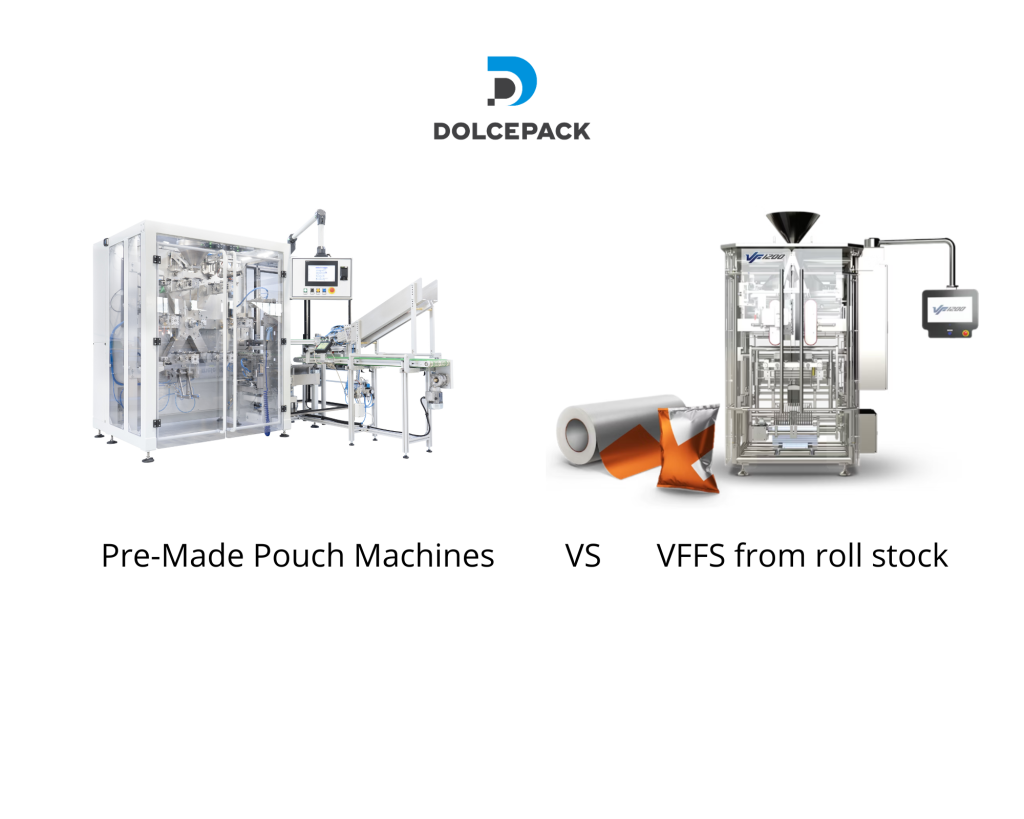
Practical takeaway:
If you need frequent format changes and want to keep downtime low across many SKUs, premade pouch systems can offer an advantage. If you run long, stable campaigns, VFFS changeover time becomes less of an issue.
5) Flexibility and Pack Formats
Premade pouch strengths
- Premium shelf-ready formats:
- Stand-up pouches (Doypack)
- Flat-bottom / box pouches
- Side gusset pouches
- Convenience features:
- Zippers (press-to-close, slider)
- Spouts/fitments (on certain systems)
- Handles, special shapes (depending on supplier)
VFFS strengths
- Best suited for:
- Pillow bags
- High-speed snack/commodity style packs
- Some premium features are possible, but complexity rises.
6) When Each System Tends to Win
Premade pouch fill & seal is often best when you want:
- Premium appearance and brand differentiation
- Resealability (zipper) as a core consumer feature
- Many SKUs / shorter production runs
- Faster design changes and marketing flexibility
- Lower operational complexity around “bag forming”
VFFS is often best when you want:
- Lowest cost per pack at scale
- High speed and continuous production
- Standard bag formats with long campaigns
- Strong internal technical capability to manage film/seal tuning
It’s Not “Better vs Worse” — It’s Strategy vs Volume
Premade pouch systems and VFFS systems both have a place in modern packaging. The right choice depends on your priorities:
- Cost per unit at high volume → VFFS often leads
- Flexibility, premium formats, and SKU agility → premade pouches often lead
- Operational reality (downtime, changeovers, team skill) → can decide the winner more than specs alone
At DolcePack, we help brands and co-packers evaluate packaging formats and material choices to match their product needs, production model, and commercial goals — from premium premade pouches to rollstock solutions.