

Growth is usually celebrated.
- New flavors.
- New sizes.
- Retail-specific formats.
- Seasonal editions.
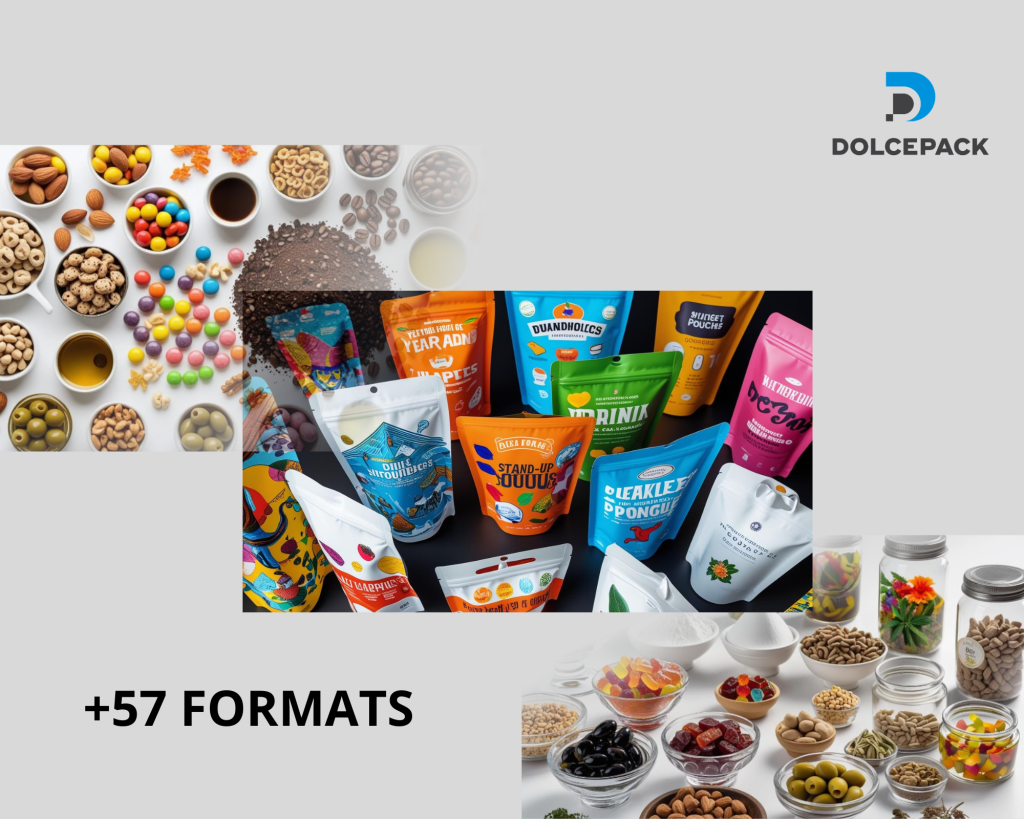
For many branded food manufacturers, the expectation is clear: introduce an average of 57 new SKUs over the next five years.
Commercially, that signals expansion.
Operationally, it signals pressure.
Every new SKU affects production physics.
- Shorter batch runs.
- More changeovers.
- More cleaning cycles.
- More mechanical adjustments.
- More label and serialization resets.
Capacity does not scale linearly with format variability.
In documented food production environments, low-volume variants have consumed close to 10% of total available capacity through changeovers alone.
That is not machine failure.
It is structural mix complexity.
When batch sizes shrink, non-productive time expands.
The machine does not run slower.
It runs less often.
The impact does not stop at the production line.
SKU proliferation extends into warehousing and distribution. Once storage utilization exceeds approximately 85%, operational efficiency begins to erode. Slow-moving variants occupy disproportionate space while high-volume products compete for picking priority. Costs accelerate as capacity approaches saturation.
Portfolio growth feels like revenue growth.
But without architectural adaptation, it behaves like friction.
Over a five-year period, the compounding effect becomes visible:
More SKUs →More changeovers →Higher startup scrap →Greater synchronization stress →
Lower effective runtime.
The traditional response is to increase speed.
But speed does not offset variability.
If changeover frequency increases, and cleaning time expands, peak throughput becomes irrelevant. What matters is sustained stability under mix pressure.
The strategic question is not:
“How do we run faster?”
It is:
“How do we absorb SKU volatility without sacrificing effective capacity?”
That requires engineered changeover strategy. Modular format handling. Integrated communication between dosing, filling, sealing, and labeling. Real planning data aligned with mechanical reality.
SKU growth is not temporary. It is a structural characteristic of modern premium food markets.
If your portfolio adds 57 new SKUs over the next five years, will your effective capacity shrink quietly?
Or was your line designed for variability from the beginning?
Design the line.
Protect the investment.
Sources
• Industry research on SKU proliferation and portfolio expansion in food manufacturing (CPG complexity cost factor studies; documented 9–10% changeover-related capacity impact cases).
• Operational performance analyses on format variability and changeover frequency in high-mix production environments.
• Warehouse efficiency and saturation threshold studies identifying performance degradation beyond approximately 85% storage utilization.
• Packaging system waste and startup scrap benchmarks, including best-in-class facilities operating below 2.5% waste and optimized lines approaching sub-1% levels.