

High-mix format variation production is not a temporary market phase.
It is the new operating model.
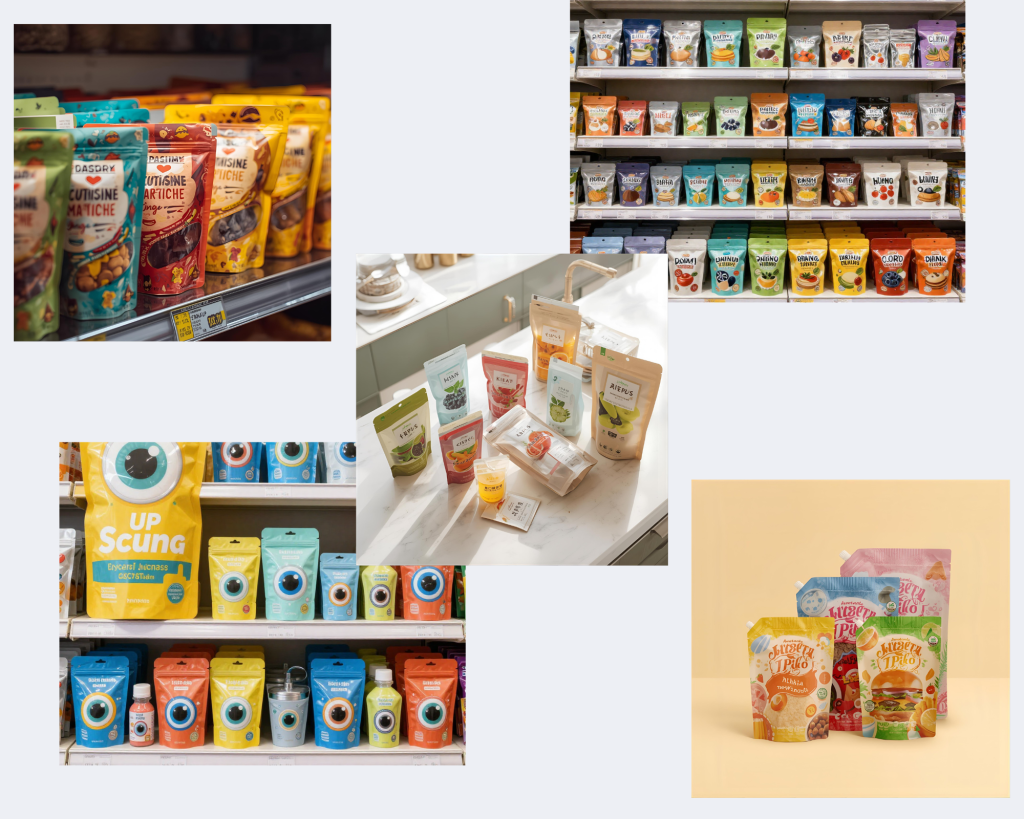
Over the last decade, portfolio expansion has accelerated across premium food categories. Many branded manufacturers now expect to introduce an average of 57 new SKUs over a five-year horizon. Batch sizes shrink. Product lifecycles shorten. Format diversity increases.
At the same time, regulatory pressure intensifies. Material transitions toward recyclability alter sealing parameters. Retailers demand tighter quality tolerances. Traceability requirements increase system data load.
Complexity is rising from multiple directions.
This shift changes how production systems must be designed.
Traditional high-volume equipment decisions have prioritized peak throughput. In high-mix environments, rated speed becomes secondary.
What determines competitiveness is sustained performance under variability.
Effective Stable Throughput becomes more relevant than theoretical output.
As format frequency increases, changeover cycles multiply. Parameter resets become more frequent. Cleaning routines expand. Material transitions introduce additional sealing variability.
Even without visible breakdowns, effective capacity can erode.
Small percentages compound.
Integration becomes critical.
Not as connectivity.
But as architecture.
Balanced buffers between upstream and downstream.
Engineered changeover sequencing.
Aligned control logic between dosing and sealing.
Data feedback systems that reflect mechanical reality.
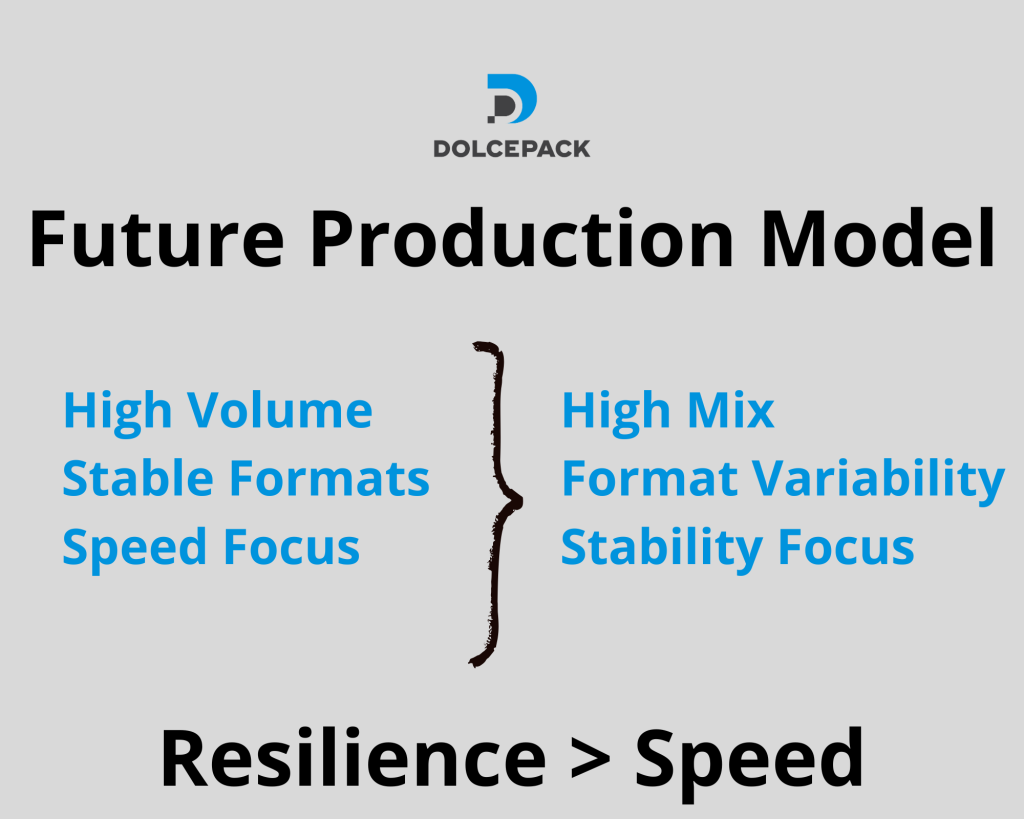
Over the next five to ten years, successful production environments will exhibit three characteristics:
- Architectural integration designed for mix variability.
- Changeover strategy engineered as a financial lever.
- Real-time performance metrics aligned with Effective Stable Throughput.
The competitive advantage will not belong to the fastest lines.
It will belong to the most resilient systems.
High-SKU volatility is structural.
It will intensify.
The strategic question for decision makers is no longer:
“How fast can the line run?”
It is:
“Is our system engineered for the next decade of variability?”
Designing for variability is not a reaction.
It is a forward investment strategy.
Design the line.
Protect the investment.
Sources
• PMMI Industry Outlook Reports – high-mix production and flexibility trends
• VDMA Packaging Machinery Reports – modular architecture and integration priorities
• European Commission packaging and recyclability directives impacting material selection
• Industry portfolio expansion studies documenting average SKU growth projections
• Packaging system performance benchmarks and waste tolerance thresholds in premium food markets