…
News
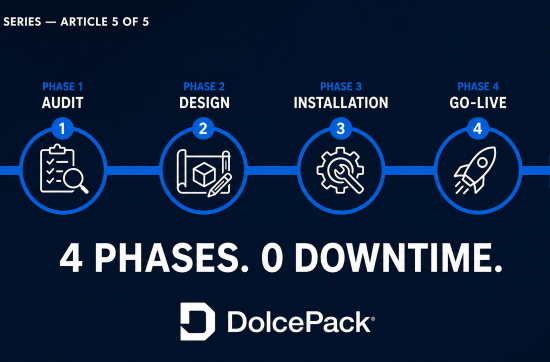
The Blister-to-Flexible Transition Roadmap: 4 Phases, 0 Downtime
A complete blister-to-flexible transition takes 4–8 months across 4 phases. Here is the full roadmap — from free line audit to post-commissioning handover — with no production downtime.
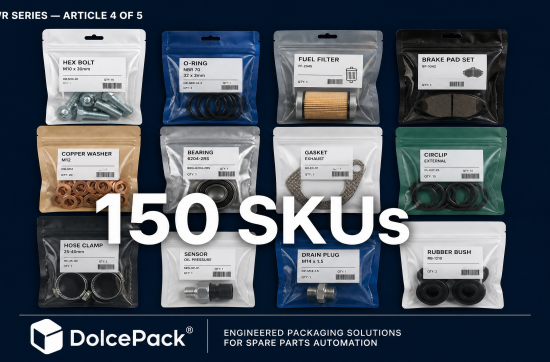
How to Package 150 SKUs Without Stopping the Line
Vision counting, bespoke tooling, rapid changeover — the operational reality of automating spare parts packaging across a high-SKU product range.
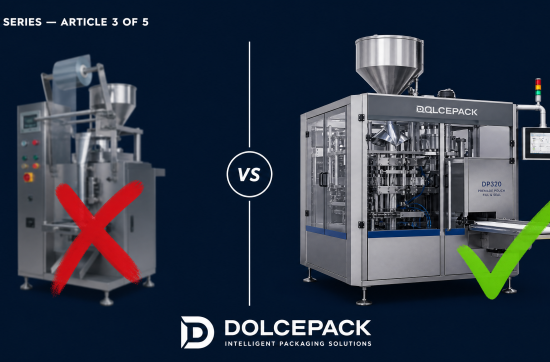
Why Standard Packaging Machines Don’t Work for Spare Parts
Food packaging machines are designed for a different problem. Here is why variable-dimension spare parts require a machine engineered specifically for industrial components.
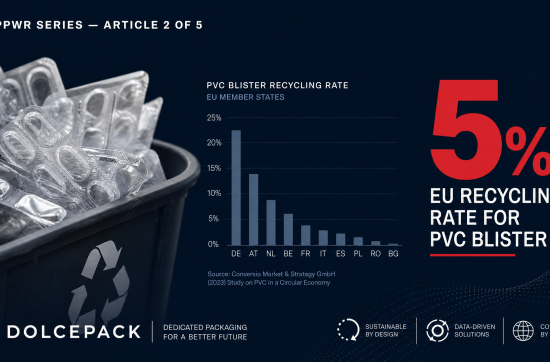
The Blister Packaging Problem by the Numbers
PVC blister packaging achieves less than 5% recycling in EU municipal streams. Here is the full cost picture — material, labour, compliance, and commercial risk — for spare parts manufacturers.
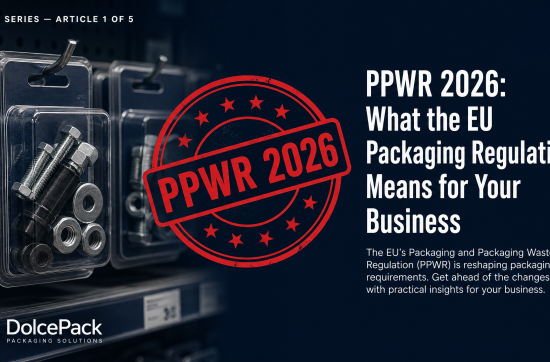
What PPWR Actually Means for Spare Parts Manufacturers
The EU Packaging Regulation (PPWR) applies from 12 August 2026. Here is what it actually requires for spare parts manufacturers — in plain language, without the legal fog.
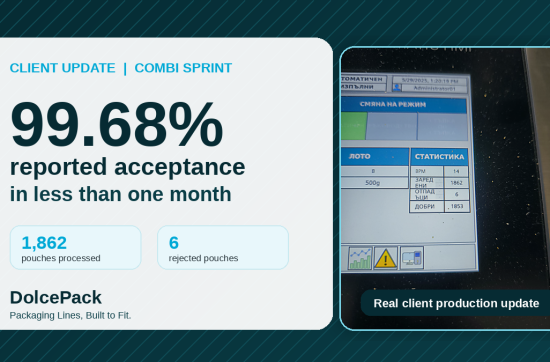
In Less Than One Month: A Client’s Combi Sprint Reaches 99.68% Efficiency
A client update from a Combi Sprint installation: 1,862 pouches processed, only 6 rejected, and a reported 99.68% acceptance rate in less than one month after installation.
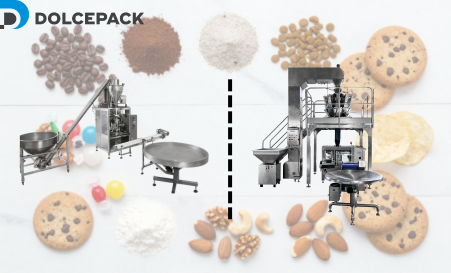
Fill-and-Seal Machine Selection: What Food and CPG Teams Should Compare Before Buying
A practical DolcePack guide to choosing a fill-and-seal machine by comparing product, pouch format, hygiene, speed, changeover, space, CapEx, ROI, and integration.
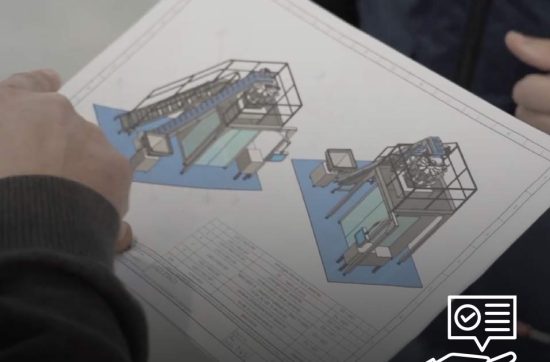
How to Know When Your Pouch Filling Line Is Ready for Automation
Learn the practical signs that show when a manual or semi-automatic pouch filling line is ready for automation, from labor pressure to seal quality and changeover limits.