

Fill-and-Seal Machine Selection: What Food and CPG Teams Should Compare Before Buying
The best machine is not always the fastest one. It is the one that fits your product, your line, and your growth plan.
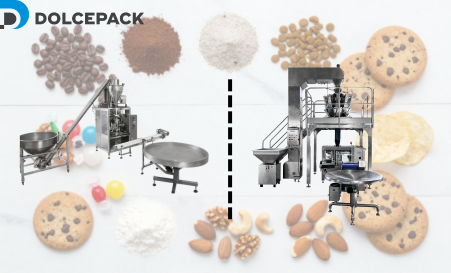
This is something we care about deeply at DolcePack. Every project is unique. A sauce does not behave like a powder. A delicate product does not move like a granule. A small launch does not need the same solution as a high-volume production line.
That is why we always start with the real production picture before talking about machinery.
A fill-and-seal machine affects much more than the filling step. It touches product quality, labor, hygiene, changeover, waste, line speed, available space, and future expansion. If the machine is chosen in isolation, it can look perfect on paper and still create problems in daily production.
estimated global packaging automation market size in 2025, according to Fortune Business Insights.
projected global packaging automation market size by 2034, according to the same source.
Start with the product
Before buying, the first question should not be, “How fast does it run?” The first question should be, “What does my product need?”
Viscosity, particulates, temperature, foaming, allergens, and shelf-life goals all influence the right dosing and sealing solution. A machine that works beautifully for one product may struggle with another. This is why testing the real product matters so much.
| What to compare | Why it matters |
|---|---|
| Product behavior | Liquids, pastes, powders, and products with pieces need different dosing solutions. |
| Pouch format | Doypacks, side-gusset, and square-bottom pouches all require proper handling. |
| Seal quality | The pouch and filling system must protect the seal area. |
| Hygiene | The machine must be easy to clean, inspect, and validate. |
| Changeover | New formats should not stop production for too long. |
| Space and layout | The equipment must fit the plant, not just the brochure. |
| CapEx and ROI | The investment must make sense for the volume and business goal. |
Hygiene and changeover deserve special attention
Hygiene deserves special attention. Hygienic design is about making machinery easier and faster to clean deeply, reducing contamination risk and improving access for inspection. This is not only a food safety topic. It is also a productivity topic. A machine that is difficult to clean can take away the time it was supposed to save.
The same is true for changeover. Consumer trends move quickly. New flavors, seasonal editions, and special sizes are part of the market now. Your packaging needs to keep pace with your ideas.
Because a machine should not just run. It should belong inside the full production system.
Comparing fill-and-seal machines?
Let’s review the real production conditions first. DolcePack can help you choose a solution built around your product, your volumes, and your future growth.